
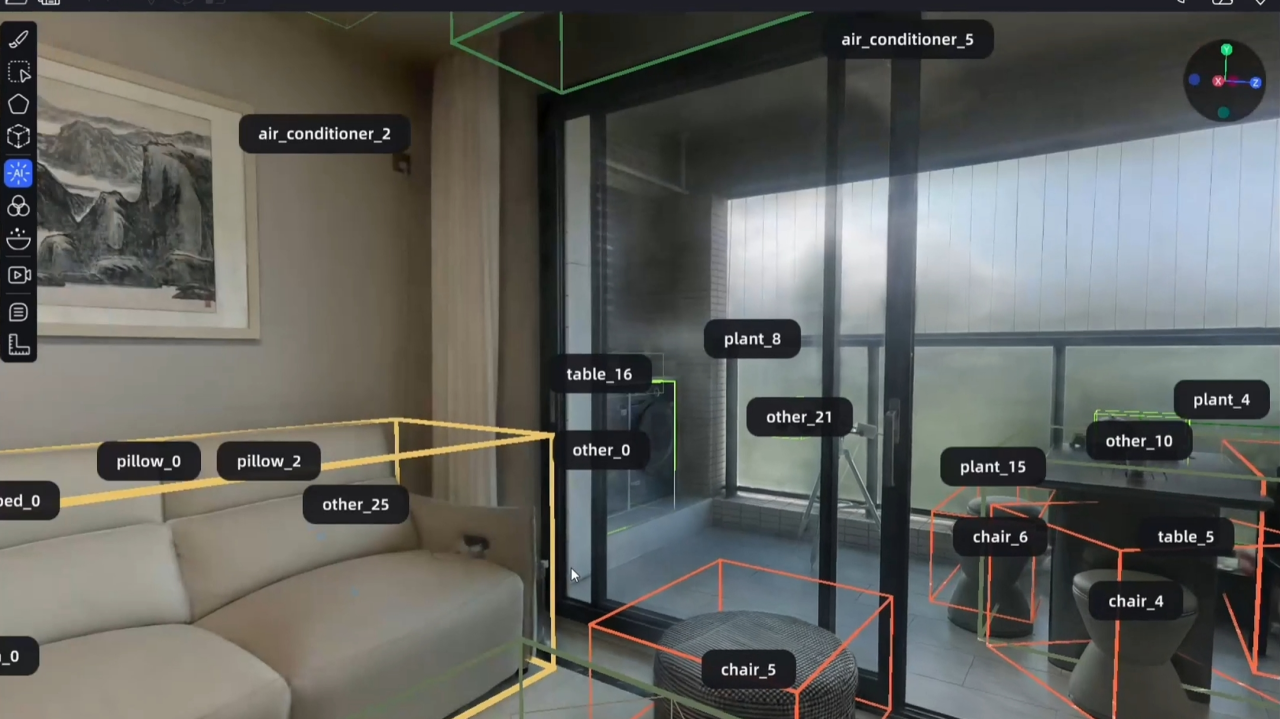
In this edition of the “Meet the Visionary” series, we explore Universal Scene Description (OpenUSD) through the lens of Mindy Li (Business Developer Manager) at XGRIDS. XGRIDS sits at the cutting edge of spatial computing, focusing on reality capture and 3D Gaussian Splatting (3DGS) to reconstruct massive, high-fidelity digital representations of our physical world.
As industries transition toward automation and spatial intelligence, Mindy and her team are leveraging OpenUSD to unify complex datasets, breaking down boundaries between real-world captured data and advanced AI simulation.
Unifying Fragmented Real-World Data
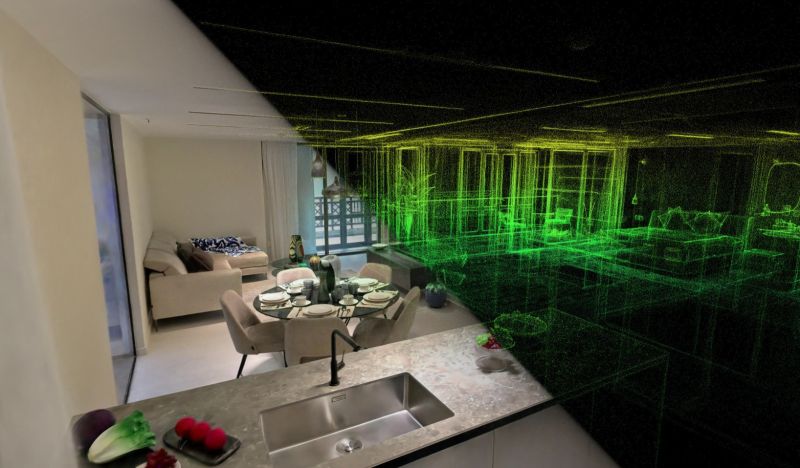
XGRIDS captures large-scale, real-world spatial datasets utilizing a diverse array of inputs including LiDAR, imagery, point clouds, and 3D Gaussian Splatting. Historically, moving these massive, distinct data representations seamlessly across various visualization, digital twin, and simulation applications presented a significant hurdle.
“One of our key challenges was enabling these different data representations to move efficiently across visualization, simulation, digital twin, and AI workflows,” Mindy explains. “We needed a scalable and interoperable scene framework that could organize complex environments while preserving structure, metadata, and relationships between assets.”
OpenUSD provided the robust foundation XGRIDS needed to solve these fragmentation challenges. By adopting it, the XGRIDS now supports exporting USD, and the team is actively driving integration with their NCORE platform.
 Turning Isolated Datasets into Composable Assets
The true magic of OpenUSD for XGRIDS lies in its powerful composition architecture and universal scene graph capabilities. Rather than locking spatial data into isolated, single-use silos, OpenUSD allows captured real-world environments to become infinitely reusable, layered, and composable assets.
“The most transformative aspect of OpenUSD is its ability to serve as a universal scene graph that connects previously disconnected workflows,” says Mindy. “Its composition architecture allows large environments, multiple asset types, and layered data sources to be managed efficiently within a single framework.”
For users, this means spatial data can be brought directly into a shared ecosystem where content can be edited, simulated, and enriched simultaneously by different tools and cross-functional teams. This workflow efficiency significantly reduces integration costs. Instead of maintaining a dizzying array of custom pipelines for different downstream platforms, XGRIDS can build entirely around a shared scene representation.
Fueling the Era of Physical AI and Digital Twins
As the industrial landscape shifts toward automation, the demand for highly precise world models has skyrocketed. Physical AI, which powers autonomous systems and robotics—requires rich, interoperable, and scalable 3D environments to simulate real-world physics and train AI behaviors safely.
OpenUSD serves as the ideal bridge, creating a direct pipeline for reality-captured scenes and 3DGS data to actively participate in:
- Virtual Production & Immersive Experiences
- Robotics Simulation & Autonomous Systems
- Large-Scale Digital Twins
- Physical AI Workflows
By establishing OpenUSD as a common foundation, spatial data flows effortlessly across tools, organizations, and industries, accelerating the pace of global innovation.
Shaping the Standard for 3D Gaussian Splatting
XGRIDS isn’t just adopting the technology—they are actively contributing to its future evolution. Through the Alliance for OpenUSD (AOUSD), XGRIDS contributes its deep expertise from the reality capture and spatial computing domains. The team is currently working on how to best represent massive 3D Gaussian Splatting datasets and Level of Detail (LOD) strategies within OpenUSD.
In parallel, XGRIDS is bridging ecosystems by participating in broader industry standardization efforts, including the Khronos 3D Formats Working Group and the KHR_gaussian_splatting extension for glTF.
To jumpstart their own implementation, Mindy credits the open-source community: “The OpenUSD documentation, sample projects, and open-source reference implementations were extremely valuable in helping us understand the framework and its architecture.”
The Future Roadmap
Looking ahead, Mindy is eager to see OpenUSD expand its capabilities to support the next generation of spatial computing. Top priorities for XGRIDS include native representations for emerging formats like 3D Gaussian Splatting, standardized LOD mechanisms, and more efficient streaming of massive spatial datasets.
Ultimately, the goal is an interconnected, multi-dimensional ecosystem. “We are particularly excited about the evolution of OpenUSD beyond traditional graphics workflows into a universal framework for world models, where captured reality, simulation data, semantic information, and AI behaviors can coexist within a shared scene representation.”
To learn more about XGRIDS’ vision, review their whitepaper on GitHub. If your company is interested in joining the Alliance for OpenUSD, sign up to become a member. Follow AOUSD on Facebook, Instagram, LinkedIn, X, and YouTube for more visionary stories.